
BUSINESS CONCEPT
A workspace for recurring video series
A creator workspace with the whole series in view.
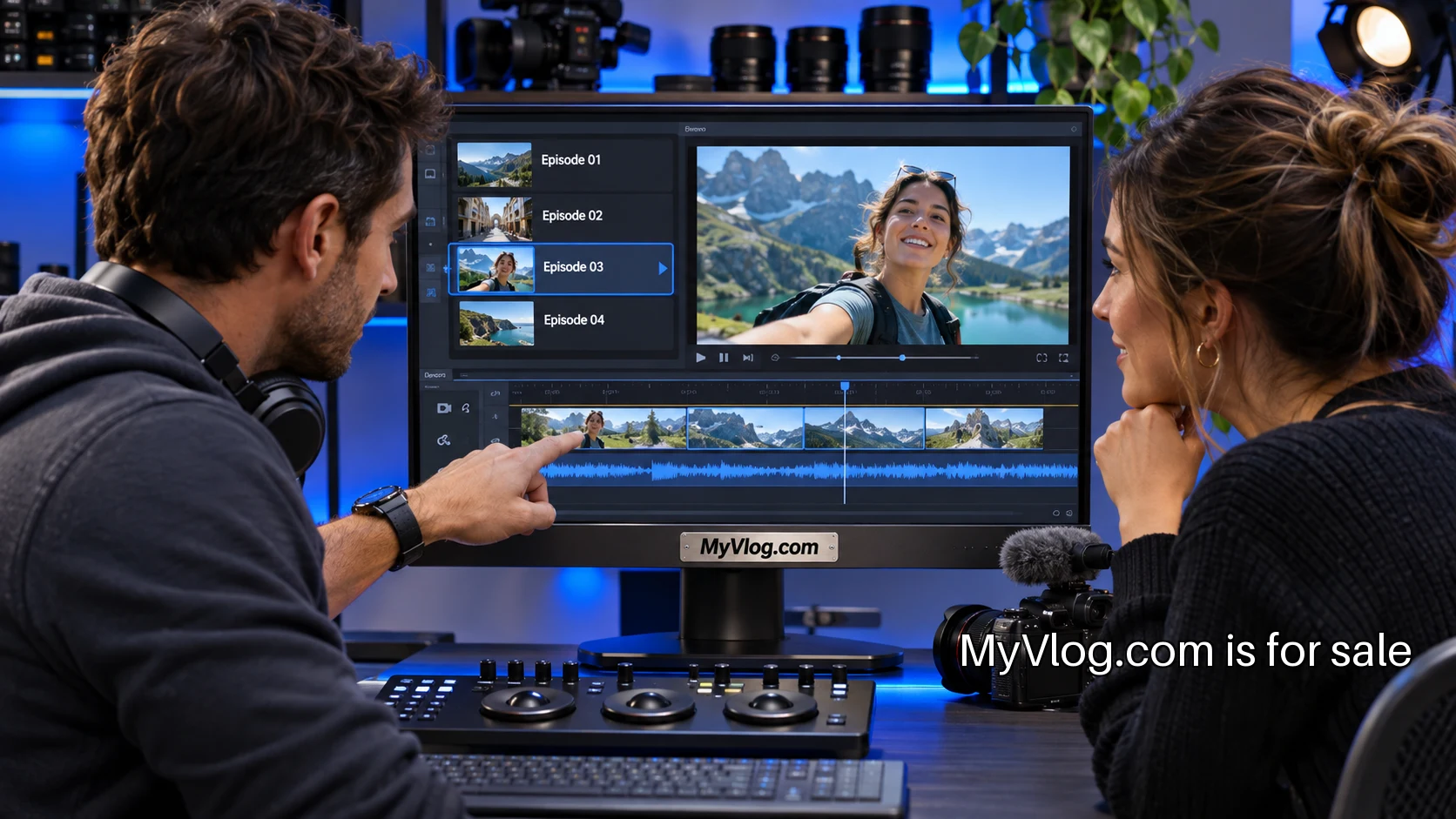
A small video team often has plenty of tools and still loses track of the next decision. The footage is in one place, comments are in another, and the person writing the episode description does not know which cut is approved. MyVlog.com could become a focused workspace for recurring series, built around the handoff from an episode idea to a published release.
The starting customer would be a creator with one or two regular collaborators. They already publish and can show how the work moves. That matters because a useful workflow product should reflect a real production rhythm. A solo beginner planning a first recording and a studio shipping several client projects each week have different needs. Pick one of those working situations and learn its details.
Treat the episode as the main record
An episode record could hold a title, a working question, an owner, a target release date and the next action. It would link to the footage and edit rather than copying every large file into a new system. The first screen should answer a plain question: what needs a decision today? A producer should be able to open the series and identify the blocked episode without reading a chat history.
Use a few states with clear meanings. “Ready to record” might mean the guest is confirmed, the location is available and the outline is approved. “Ready to publish” might mean the edit, captions, credits and destination links have been checked. Every state needs an owner who can say when those conditions are met. A colorful board is only useful if its labels match real handoffs.
A simple example is an interview series with a host, an editor and a producer. The host approves the questions. The editor posts a review cut. The producer checks names and publication details. The workspace can show that the edit is waiting for a factual answer from the host, while the producer can prepare the episode page. That is a concrete improvement to the team's day.
Keep review decisions visible
Comments on an edit need to become decisions. A note might request a tighter opening, flag a name spelling or ask whether a section should be removed. Give each comment a status and keep the final decision near it. The person making the change should not have to guess whether a conversation in another tool superseded the original note.
Start with links and short records instead of building a full video review engine. A workspace can store the current review URL, the version identifier and the approval history. This leaves the specialized editing tools to do their job and concentrates the product on the missing coordination. The founder can test whether that record alone saves the team from using an outdated cut.
Accessibility belongs in those handoffs. The W3C media planning guidance is a useful reference when deciding which tasks need an owner before production begins. Add the relevant tasks to the episode template early. They should arrive with the brief, not as a surprise on release morning.
Find the smallest paid job
The first commercial offer could be one shared series workspace with a fixed number of collaborators. The value proposition would be specific: a visible release record and fewer unresolved handoffs. Test the offer with teams that can describe a recent missed approval or a duplicated task. Ask them to walk through that episode, using their actual materials with permission.
A founder can run the pilot manually. Set up the records, join a weekly production check-in and note where people still leave the workspace. Those moments reveal a missing field, an unclear status or a task that should remain elsewhere. Use the pilot to learn which record the team needs before committing to an extensive feature set.
Pricing research should include the person who would approve the expense. Ask what the team currently pays for coordination tools and which part of the workflow is troublesome enough to change. A user who likes a screen is different from a producer who will introduce it to collaborators. The pilot should include onboarding a second person, because shared use is the heart of this product.
Connect publication back to planning
Once an episode is released, preserve its final title, destination URLs, approved thumbnail and publication date. That record can seed the next episode's checklist. A short retrospective might capture that guest approvals need more time, or that the transcript reviewer needs a pronunciation note before filming. Keep those observations tied to the series rather than buried in a general notes folder.
Distribution details can remain linked to their official source. For example, the platform's chapter documentation can guide the person preparing timestamps. The product does not need to pretend that every destination follows the same rules. It needs a reliable place to record that the correct check was completed.
MyVlog.com gives this workspace a personal publishing identity instead of a generic project-management label. A founder could begin with one recurring series, one episode template and one handoff that is currently hard to follow. Run the next three releases through that structure. The result will show where the product should become more capable and where a simple, shared record is already enough.
A HOME FOR YOUR VIDEO BRAND